- The Daily Brief, by The Kenyan Wall Street
- Posts
- A Stitch in Time...
A Stitch in Time...
Kenya's #1 newsletter among business leaders & policy makers

Good evening 👋🏽. It's Brian from The Kenyan Wall Street.
In today’s newsletter :
President William Ruto has assented to a law that halves Value Added Tax (VAT) on petroleum products from 16% to 8%
In Kenyan election years, government spending expands by an additional 1.0 to 1.5 percentage points of GDP beyond what the fiscal trajectory would otherwise dictate. An economist explains this phenomenon…
A Stitch in Time : Fuel Taxes Officially Lowered
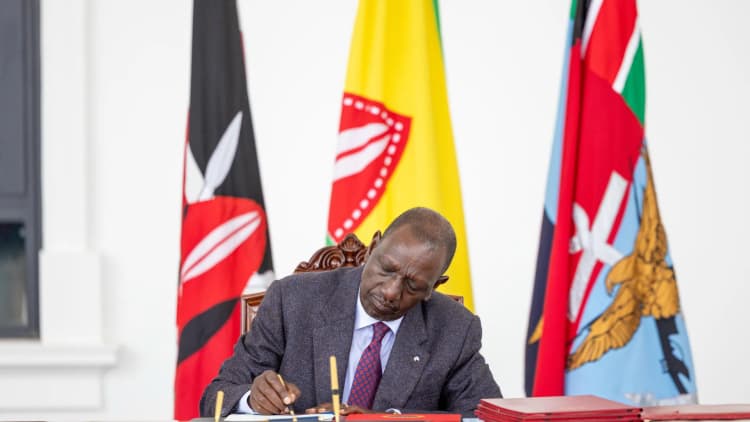
President William Ruto
By Fred Obura
President William Ruto’s assent to an emergency law cutting fuel VAT from 16% to 8% formalises a rapid policy shift aimed at cushioning households from global oil shocks linked to Middle East tensions, but it also locks Kenya into a temporary fiscal relief window rather than a structural reset. The 90-day measure has already fed through into pump prices, pushing petrol and diesel back below KSh 200 in Nairobi after a swift reversal of earlier increases, even as lawmakers warn that deeper tax and pricing reforms remain unresolved. Beyond immediate relief, the debate in Parliament exposes competing pressures: calls to streamline fuel levies, accelerate domestic petroleum development, and ensure price cuts translate into lower transport costs rather than absorbed margins. The result is a familiar policy pattern where external shocks trigger fast, visible intervention at the pump, while the harder questions of taxation, energy dependence, and market structure remain deferred.
Read the full article here >>>>>
Heads Up



Are Listed Firms Ready for Sustainability Reporting?

By Harry Njuguna
Listed companies on the NSE have been given 75 days to prepare for a reporting shift that quietly redefines sustainability as financial accounting under a framework that will become mandatory in January 2027. The new rules bind issuers to IFRS S1 and S2, requiring them to quantify how climate and sustainability risks affect valuation, cash flows, and emissions across their full value chains, alongside traditional audited financial statements. Yet despite the tightening timeline, most firms remain unprepared, with only KCB Group publicly confirming full alignment. The result is a widening gap between strong governance scores and weak disclosure capacity, as Kenya’s capital market is pushed toward global ESG standards faster than many issuers can realistically absorb.
Read the article here >>>>>
More on Capital Markets

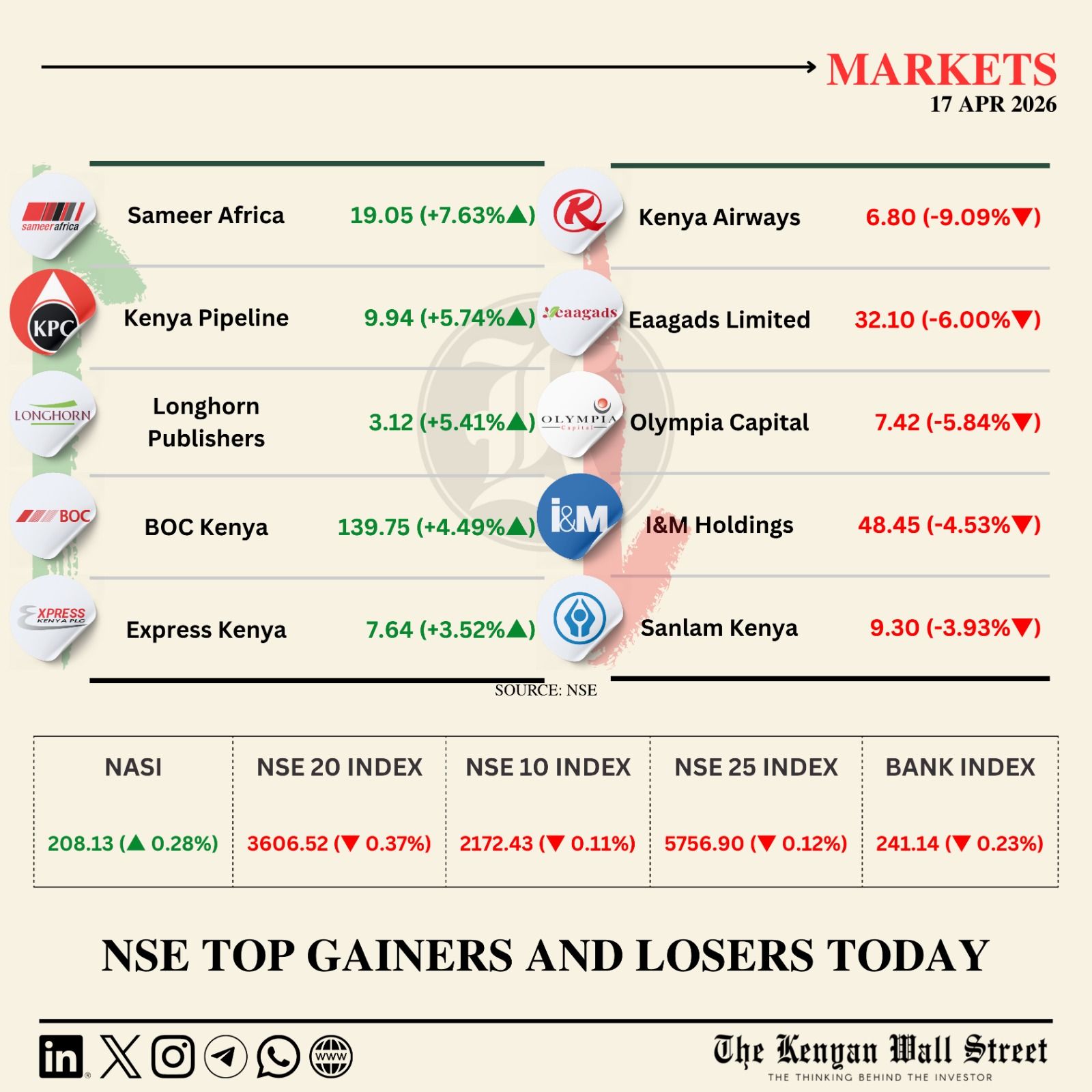
For timely and insightful market updates, follow our Whatsapp page here
OPINION : How Kenya's Elections Hijack Economic Policy Every Five Years
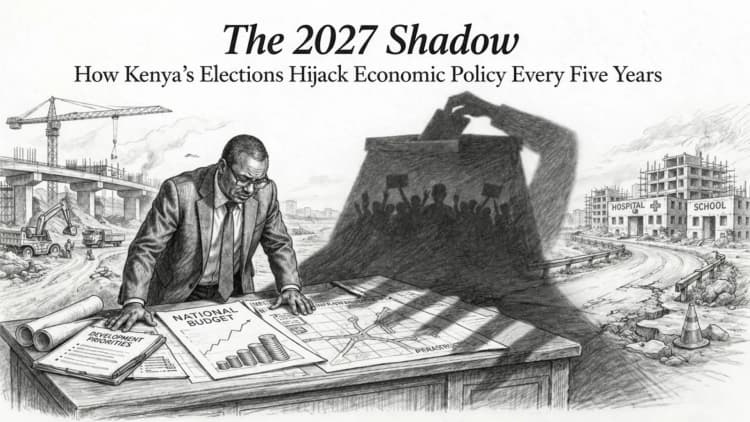
Kenya is still eighteen months from the August 2027 elections, yet its fiscal life already seems to have adjusted its gait to the coming campaign. The pattern, long described in theory by William Nordhaus, is now almost procedural in Nairobi: spending expands, deficits widen, and the promises made in the heat of visibility quietly harden into permanent obligations. This year, that familiar cycle is being squeezed by the aftershocks of the 2024 protests, the collapse of Kenya’s IMF programme, and a renewed reliance on costly domestic borrowing. What emerges is not simply a story of fiscal strain, but of an economy where the logic of elections repeatedly overrides the logic of consolidation, leaving the shadow of 2027 to settle early over every line of the budget.
Economist Prince Muraguri writes >>>>>
Also on Economy

On Your Watchlist
Crypto Insights with Luno

Subscribe to this newsletter here »»»»»
Stocks and crypto markets saw a brief return of, dare we say, optimism after a proposed US-Iran ceasefire last week. Wall Street made crypto history again, while Ripple also has its sights on Africa. Let’s get into it.
In this week’s issue:
Black gold calls the shots
Morgan Stanley launches new Bitcoin ETF
Ripple sets its sights on Africa
Bitcoin reaches $72,000 during turbulent week of geopolitical tension
Crypto markets posted a cautious recovery with Bitcoin rising roughly 4-5% above $70k and Ethereum gaining around 3-8%, as easing US-Iran tensions triggered a broad risk‑on move and over $600 million in short‑liquidations. Main catalysts were geopolitical relief, steady BTC‑ETF inflows, and further institutional accumulation (Strategy, Metaplanet).
Bitcoin's moment in the Energy Crisis
The crisis has handed Bitcoin what many analysts expected to be a major test. When US and Israeli forces launched strikes on Iran on a Saturday in late February, Bitcoin was among the few major liquid markets open, and it absorbed the shock quickly, falling about 3.5-4.5% on the opening weekend before stabilising. By mid‑March, Bitcoin was up approximately 7-8% from its immediate post‑strike lows, while gold had dropped roughly 16-17% and the S&P 500 was down around 4-5% since the start of the conflict. Gold, the traditional safe haven, suffered its sharpest monthly decline since at least 2022, and the S&P 500 recorded its steepest monthly drop in the same period, leaving Bitcoin as the only one of the three assets in clear positive territory over that stretch.
Morgan Stanley launches MSBT, Wall Street's first bank-backed Bitcoin ETF
Morgan Stanley Investment Management announced in a press release the launch of Morgan Stanley Bitcoin Trust, an exchange-traded product (ETP) that will track the performance of Bitcoin. It’s the first Wall Street bank to launch its own Bitcoin-tracking ETF. Other banks have launched their own ETFs but the distinction here being that previous Bitcoin ETFs were all issued by standalone asset managers like BlackRock and Fidelity, not bank-owned investment arms.
This is a summary of the Luno newsletter. Follow this link to read the complete newsletter version and stay updated to crypto news.
Snapshots
Keep up with what’s happening on our X and LinkedIn pages. Stay updated with the latest financial news on our website The Kenyan Wall Street.