- The Daily Brief, by The Kenyan Wall Street
- Posts
- The Deepening Reliance on Domestic Debt
The Deepening Reliance on Domestic Debt
Kenya's #1 newsletter among business leaders & policy makers


Register here »»»»»
Hello 👋🏽 It's Brian from The Kenyan Wall Street.
What’s inside…
An analysis of Kenya’s debt stock : The state’s appetite for domestic debt intensifies.
Can Kenya's biodiversity become the state’s tool for financial mobilization?
The Gulf crisis is affecting Kenyan exports. Here’s why new trade routes are needed?
These and more stories…
The Deepening Reliance on Domestic Debt

By Harry Njuguna
What stands out is how Kenya’s KSh 12.4 trillion debt stock is increasingly being financed from within rather than abroad, with domestic investors now carrying the heavier load. Banks alone hold about a third of this domestic pile, effectively tying the financial sector’s balance sheets to the state’s borrowing needs. Pension funds and insurers sit just behind them, turning long-term household savings into a steady engine of government funding. Meanwhile, China’s once-dominant bilateral footprint is steadily shrinking, replaced by multilateral lenders and local market issuance rather than headline-grabbing infrastructure loans. Even the Treasury’s push to extend maturities toward eight years suggests a system trying to buy time as much as money, smoothing today’s obligations across a longer fiscal horizon.
Read the full debt analysis here >>>>>
Monetizing Biodiversity
By Fred Obura
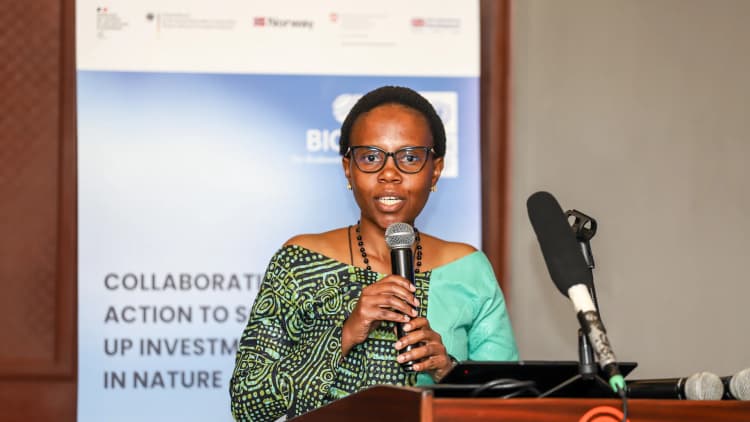
Kenya is attempting to redefine what counts as an investable asset, recasting biodiversity as balance sheet material rather than ecological backdrop. Nearly half of the economy, officials in the National Treasury note, already depends on nature-linked sectors; a dependency they are now trying to formalise into financial instruments and investment pipelines. The Biodiversity Finance Initiative is designed less as conservation policy than as capital architecture, aimed at pulling private money into ecosystems through green bonds, biodiversity credits, and blended finance structures. In this framing, rivers, soils, and forests are no longer passive endowments but revenue-generating infrastructure : priced, tracked, and folded into the logic of growth.
Read the article here >>>>>
Desperately looking for New Trade Routes

By Fred Obura
Kenyan exporters are being forced to reroute trade as Middle East disruptions threaten as much as KSh164.6 billion in annual shipments. The Gulf crisis has exposed how dependent key sectors such as tea, flowers, and horticulture, are on a single, congested logistics corridor that now faces delays stretching up to 20 days. With freight costs rising and perishables spoiling mid-transit, the shock is less geopolitical abstraction than balance-sheet reality for exporters already working on thin margins. In response, policymakers are scrambling to diversify away from Gulf-linked routes toward Africa-wide trade and alternative corridors through Europe, Asia, and Latin America.
Read the full article here >>>>>
Reforming the Corporate Structure

By Harry Njuguna
Co-operative Bank is preparing to reorganise itself into a non-operating holding company, joining a familiar line of Kenyan lenders that have redrawn their corporate maps for flexibility rather than urgency. Under the plan, the listed entity would become Co-op Bank Group PLC, while its core banking operations are shifted into a separately licensed subsidiary. The move, backed by regulators but still awaiting shareholder approval, is a formalisation of a structure already adopted by peers like Equity and KCB over the past decade. Behind the governance language sits a simpler ambition: to make a sprawling KSh 827 billion balance sheet easier to deploy across banking, insurance, and regional subsidiaries without the friction of a single-entity constraint.
Read the full article here »»»»»
Heads Up

What You Should Watch!
Happening Tomorrow

AI innovation isn’t slowing down, but regulation is catching up fast.
Join us on Thursday, April 23rd at 6:00 PM EAT for a deep dive into what innovators are actually building and how evolving regulations across the US, UAE, and EU are shaping the future of fintech and investment. Hosted by Eric Asuma, Founder of The Kenyan Wall Street, this session will unpack the real intersection of AI, policy, and capital.
Featuring: David Awad – Principal Investor & Fractional CTO, Dubai Future District Fund
🗓️ April 23rd, 2026
⏰ 6:00 PM EAT
🔗 Register now — https://streamyard.com/watch/6dzr2MsgiExw

For timely and insightful market updates, follow our Whatsapp page here

Be a part of us here »»»»»
Capital Club East Africa brings together business leaders, entrepreneurs and professionals in a refined space designed for meaningful connections, thoughtful conversations and exceptional experiences. From networking and private events to dining and a true sense of community, membership opens the door to more.
Learn more here »»»»»
Keep up with what’s happening on our X and LinkedIn pages. Stay updated with the latest financial news on our website The Kenyan Wall Street.